What attendance records does Wisconsin Shares require from child care centers?
If you accept Wisconsin Shares, attendance records are your audit trail. The rules are specific: exact times, fast production, and three years of retention.
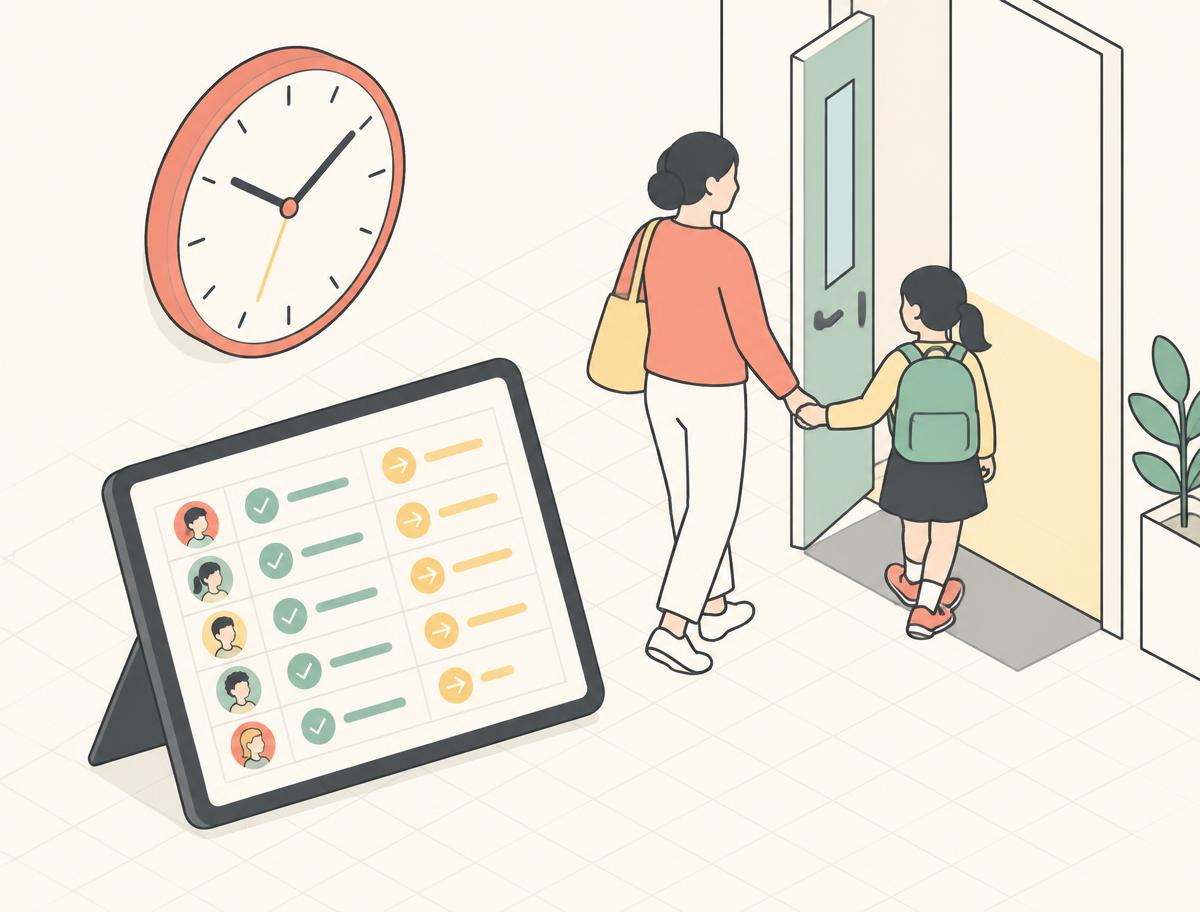
The requirement
Exact arrival and departure times — never rounded
“The attendance records must contain the children’s exact daily arrival and departure times. These times must not be rounded.”
Centers can use DCF’s Daily Attendance Record (DCF-F-2438), or their own form or software if it captures the same information.
Audits
Produce records within 24 hours
Records must be submitted to the local agency or DCF within 24 hours of a request. Mailed records should be originals; faxed or emailed electronic copies are acceptable.
Three years
Keep them 3 years after the last day
Attendance records must be kept on site while the child is enrolled and for 3 years after the child’s last day of attendance (Wis. Stat. 49.155(6m)) — even if you stop participating in Wisconsin Shares.
- Missing or incomplete records can lead to an overpayment assessment
- They can also lead to permanent suspension from Wisconsin Shares
Tracking
Where KinderPilot fits
KinderPilot keeps children’s enrollment files and Wisconsin Shares payment agreements organized and printable. Check that whatever attendance system you use records exact, unrounded times.
KinderPilot is a tracking aid for Wisconsin centers. It helps you see what is recorded and what is coming due, but only DCF determines compliance, and it does not replace the rulebook or your licensing specialist.
Frequently asked questions
Official sources
This article is educational and is not legal advice or a licensing determination. Consult the current rulebook and your assigned licensing specialist.